

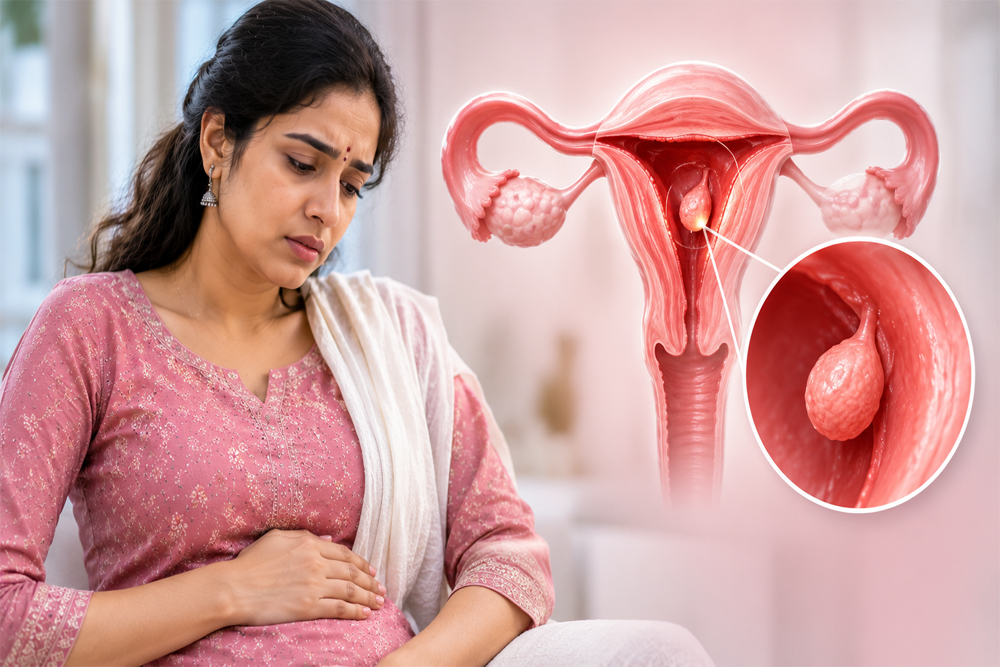
Menstrual irregularities, unexpected bleeding between periods or difficulty getting pregnant can sometimes indicate an underlying uterine condition. One such condition is the development of endometrial polyps. Endometrial polyps are growths that develop in the inner lining of the uterus, known as the endometrium. They form when cells in the uterine lining grow excessively, creating small projections that extend into the uterine cavity. These growths may be small or large, and a woman may have a single polyp or multiple polyps.
Although most endometrial polyps are non-cancerous, they can sometimes cause abnormal uterine bleeding, menstrual changes and fertility-related concerns. Some women may not experience any noticeable symptoms, and the condition may only be discovered during a routine gynaecological examination or fertility evaluation. Understanding endometrial polyp symptoms, the available diagnostic methods and uterine polyps treatment options can help women seek timely medical attention and make informed decisions about their reproductive health.
What Are Endometrial Polyps?
Endometrial polyps are abnormal tissue growths that develop from the endometrium, the inner lining of the uterus. They usually remain attached to the uterine wall through a thin stalk or a broader base. These growths contain endometrial glands, supporting tissue and blood vessels. Their size can range from a few millimetres to several centimetres.
Endometrial polyps can occur in women of reproductive age, during perimenopause and after menopause. Although most are benign, a small proportion may contain precancerous or cancerous changes, particularly in women with certain risk factors. Polyps can affect menstrual health and, in some cases, interfere with the process of embryo implantation.
What Causes Endometrial Polyps?
The exact cause of endometrial polyps is not always known. However, hormonal factors, particularly the influence of oestrogen, are believed to play an important role in their development. Certain factors may increase the likelihood of developing uterine polyps:
- Hormonal Changes: Oestrogen stimulates the growth of the uterine lining, and increased sensitivity to this hormone may contribute to polyp formation.
- Age: Endometrial polyps are more commonly identified during the reproductive years and around menopause.
- Obesity: Higher body fat levels can influence oestrogen levels and may increase the risk of endometrial polyps.
- Hypertension: High blood pressure has been associated with an increased likelihood of developing endometrial polyps.
- Certain Medications: Tamoxifen, a medication used in some breast cancer treatments, may increase the risk of uterine polyp development.
- Hormonal Imbalance: Changes in the normal hormonal environment may contribute to excessive growth of endometrial tissue.
Having one or more of these risk factors does not necessarily mean that a woman will develop endometrial polyps.
What Are the Common Endometrial Polyp Symptoms?
Some women with endometrial polyps experience no symptoms. Others may notice changes in their menstrual cycle or unexpected vaginal bleeding. Recognising endometrial polyp symptoms can help women seek an appropriate gynaecological evaluation.
1. Heavy Menstrual Bleeding: One of the common symptoms is unusually heavy menstrual bleeding. Women may notice increased menstrual flow, prolonged periods or the need to change sanitary products more frequently than usual.
2. Irregular Menstrual Cycles: Endometrial polyps may cause irregular menstrual bleeding. Periods may become unpredictable, with bleeding occurring at different intervals.
3. Bleeding Between Periods: Some women experience spotting or bleeding between menstrual cycles. This may occur even when their regular periods are otherwise normal.
4. Bleeding After Menopause: Any vaginal bleeding after menopause requires medical evaluation. Although many cases are caused by benign conditions, endometrial polyps can sometimes be responsible and should be assessed to rule out more serious abnormalities.
5. Difficulty Getting Pregnant: In some women, endometrial polyps may interfere with embryo implantation or affect the uterine environment. This can become a concern for women who are trying to conceive.
6. Bleeding After Sexual Intercourse: Some women may experience spotting or bleeding following sexual intercourse. However, this symptom can have several possible causes and should not automatically be attributed to uterine polyps
Important: These symptoms are not exclusive to endometrial polyps. Fibroids, hormonal changes, infections and other uterine conditions can cause similar symptoms. A proper examination is necessary to identify the underlying cause.
How Is Endometrial Polyp Diagnosis Done?
If a woman experiences abnormal menstrual bleeding, unexplained spotting or difficulty conceiving, a gynaecologist may recommend investigations to identify the underlying cause. Endometrial polyp diagnosis involves examining the uterine lining and identifying the presence, size and location of any abnormal growths.
The following tests may be recommended:
1. Transvaginal Ultrasound Scan: A transvaginal ultrasound is often the first investigation used to identify endometrial polyps. During this examination, a small ultrasound probe is inserted into the vagina to obtain detailed images of the uterus and its lining.
It helps doctors assess:
- Thickness of the endometrium.
- Presence of abnormal tissue growths.
- Size and location of suspected polyps.
- Other uterine abnormalities, such as fibroids.
2. Saline Infusion Sonohysterography (SIS): If the ultrasound findings are unclear, the doctor may recommend saline infusion sonohysterography. During this procedure, a small amount of sterile saline is introduced into the uterine cavity through a thin catheter. An ultrasound is then performed to obtain a clearer view of the uterine lining. This helps identify small polyps and distinguish them from other abnormalities inside the uterus.
3. Hysteroscopy: Hysteroscopy is one of the most reliable methods for examining the inside of the uterus. A thin instrument with a small camera, called a hysteroscope, is gently inserted through the cervix into the uterine cavity. It allows the gynaecologist to:
- Directly examine the uterine lining.
- Identify the number, size and location of polyps.
- Assess other abnormalities inside the uterus.
- Remove identified polyps when appropriate.
- Collect tissue samples for laboratory examination.
Hysteroscopy can be used for both diagnosis and treatment, depending on the clinical requirement.
4. Endometrial Tissue Examination: If a polyp is removed, the tissue is generally sent for histopathological examination. This laboratory test examines the tissue under a microscope to determine whether the growth is benign or contains any precancerous or cancerous changes. This is particularly important for women with postmenopausal bleeding or other risk factors.
What Are the Uterine Polyps Treatment Options?
The treatment for endometrial polyps depends on several factors, including the woman’s age, symptoms, polyp size, menopausal status, fertility plans and risk of abnormal tissue changes. Not every woman with an endometrial polyp requires immediate treatment. However, symptomatic women and those with certain risk factors may benefit from removal.
1. Observation and Regular Monitoring: Small, asymptomatic polyps in women with a low risk of malignancy may sometimes be monitored without immediate intervention. The doctor may recommend periodic ultrasound examinations to assess whether the polyp is changing in size or disappearing. Some polyps may resolve naturally, particularly in premenopausal women. This approach is not suitable for everyone, especially women experiencing persistent abnormal bleeding or postmenopausal bleeding.
2. Hysteroscopic Polypectomy: Hysteroscopic polypectomy is a commonly recommended treatment for removing endometrial polyps. During the procedure, the hysteroscope is inserted into the uterus, allowing the doctor to identify and remove the polyp under direct visual guidance.
How is the procedure performed?
- The patient is prepared for the procedure according to the planned anaesthesia and clinical requirements.
- A hysteroscope is gently passed through the cervix.
- The doctor examines the uterine cavity and identifies the polyp.
- Specialised instruments are used to remove the growth.
- The removed tissue is sent for histopathological examination.
The procedure may be performed in an outpatient or operating-room setting, depending on the size and number of polyps, patient comfort and medical requirements. Hysteroscopic removal allows targeted treatment while reducing the possibility of leaving behind tissue compared with blind removal techniques.
3. Medication for Symptom Management: In selected cases, hormonal medications may be prescribed to manage associated abnormal uterine bleeding. However, medication does not reliably eliminate an existing endometrial polyp. It should not be considered a substitute for appropriate evaluation or removal when removal is indicated. The treatment decision should be based on the underlying condition and the patient’s reproductive goals.
How Do Endometrial Polyps Affect Fertility?
For women planning pregnancy, endometrial polyps and fertility are important considerations. The endometrium plays a vital role in pregnancy because it provides the environment where the embryo attaches and begins developing. When a polyp develops inside the uterine cavity, it may interfere with this process in certain women.
1. May Affect Embryo Implantation: A polyp may alter the normal uterine environment or interfere with the area where an embryo needs to attach. Depending on its size and location, it may affect the chances of successful implantation.
2. May Be Associated with Difficulty Conceiving: Some studies have found an association between endometrial polyps and infertility. However, not every woman with a polyp experiences fertility problems. Other factors, including ovulation, egg quality, sperm health and fallopian tube function, also influence conception.
3. May Affect Fertility Treatment Outcomes: Endometrial polyps identified during fertility investigations may need further assessment before proceeding with treatments such as intrauterine insemination (IUI) or in vitro fertilisation (IVF). In selected patients, removing the polyp may improve the chances of pregnancy.
4. Can Polyp Removal Improve Pregnancy Chances? Hysteroscopic polypectomy may be recommended for women experiencing infertility, particularly when a polyp is identified within the uterine cavity. Evidence suggests that removal may improve pregnancy outcomes in certain fertility settings. However, the benefit varies according to individual circumstances, and it does not guarantee pregnancy. The fertility specialist will consider the polyp’s size, location, number, previous reproductive history and planned fertility treatment before recommending removal.
Can Endometrial Polyps Come Back After Treatment?
Yes. Although hysteroscopic polypectomy removes the existing growth, new polyps can develop in some women. The likelihood of recurrence may depend on individual hormonal factors, the presence of multiple polyps and other underlying conditions.
Women who have previously undergone polyp removal may be advised to attend follow-up consultations, particularly if abnormal bleeding or other symptoms return. If symptoms persist or recur, further ultrasound or hysteroscopic evaluation may be recommended.
FAQs
Most endometrial polyps are benign (non-cancerous). However, some may contain precancerous or cancerous changes. The risk is higher in certain groups, particularly postmenopausal women with abnormal bleeding. Histopathological examination helps determine the nature of the removed tissue.
Yes. Some small endometrial polyps may shrink or disappear naturally, particularly in premenopausal women. However, regular monitoring and medical evaluation are important to determine whether observation is appropriate.
Endometrial polyps are more commonly associated with abnormal bleeding than severe menstrual pain. However, some women may experience menstrual discomfort along with other symptoms. Persistent pelvic pain should be evaluated separately.
Hysteroscopic polypectomy is generally a minimally invasive procedure. It does not require an abdominal incision because the instruments are introduced through the vagina and cervix. The procedure setting and anaesthesia depend on individual requirements.
Yes. Many women can conceive after hysteroscopic polypectomy. In selected women experiencing infertility, removing a polyp may improve the chances of pregnancy. Your doctor will advise when to start trying to conceive again based on your recovery and treatment plan.
No. Small, asymptomatic polyps in women with a low risk of malignancy may be monitored. Removal is more likely to be recommended when there is abnormal bleeding, postmenopausal bleeding, fertility-related concerns or suspicious findings.
They may affect the uterine environment and potentially interfere with embryo implantation. If a polyp is identified during IVF evaluation, the fertility specialist will assess whether removal before embryo transfer is appropriate.
Prioritise Your Uterine and Reproductive Health
Endometrial polyps are common uterine growths that may cause menstrual irregularities, abnormal bleeding and fertility-related concerns. Although most are benign, identifying and evaluating them is important for maintaining reproductive and gynaecological health. Recognising endometrial polyp symptoms, undergoing timely diagnosis and choosing the appropriate treatment can help prevent prolonged symptoms and address potential fertility concerns.
At Nandini Women’s Clinic, personalized gynaecological evaluation and appropriate treatment planning help women understand their uterine health and make informed decisions about their reproductive goals. If you experience irregular menstrual bleeding, spotting between periods or difficulty conceiving, consult a gynaecologist for an appropriate evaluation. Your reproductive health deserves timely attention and the right medical care.
