

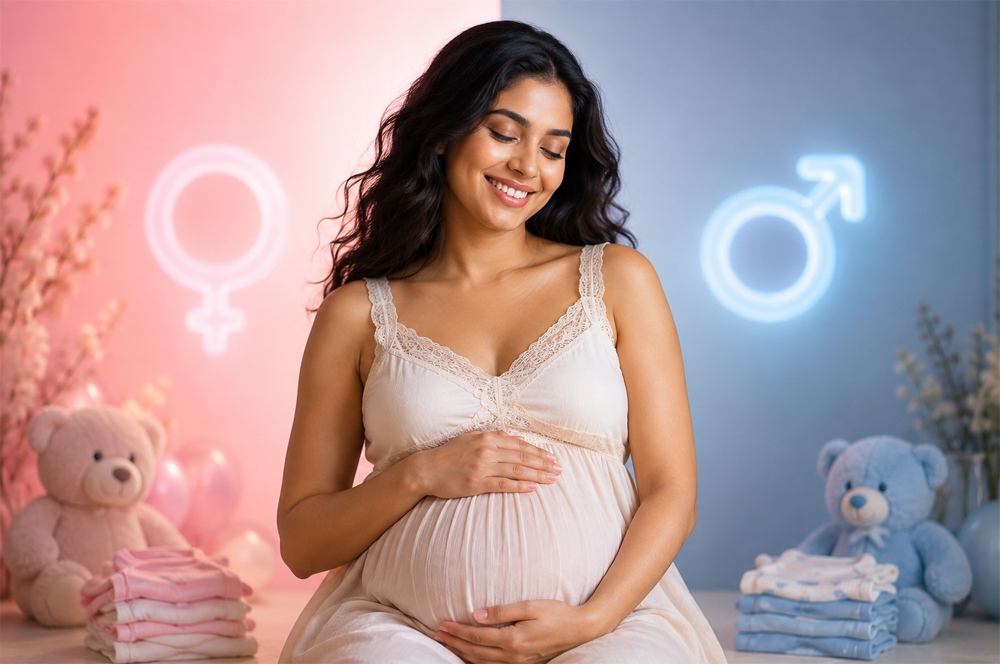
“You’re glowing! It must be a girl.”
“Your skin looks so clear—you must be carrying a boy!”
But can your skin really reveal your baby’s gender?
The short answer is no. While pregnancy can certainly bring noticeable changes to your skin and appearance, a pregnancy glow is not a scientifically reliable way to determine whether you’re having a boy or a girl.
Let’s understand what actually causes this glow and separate pregnancy myths about baby gender from medical facts.
What Is the Pregnancy Glow?
The term pregnancy glow is commonly used to describe skin that appears brighter, smoother, or more radiant during pregnancy.
However, not everyone experiences this change in the same way. Some women may notice glowing skin, while others may experience acne, pigmentation, dryness, or increased sensitivity.
This is because pregnancy hormones and skin can interact differently from person to person.
Several changes during pregnancy may contribute to the appearance of glowing skin.
Increased Blood Flow
During pregnancy, your body works harder to support the developing baby. Increased blood circulation can make the skin appear brighter or give the cheeks a flushed appearance.
Hormonal Changes
Hormones can affect oil production in the skin. For some women, increased oil production may make the skin appear naturally dewy or radiant.
For others, the same hormonal changes may contribute to acne or breakouts.
Changes in Fluid Levels
Increased blood volume and fluid retention may also affect the appearance and fullness of the skin.
So, while the pregnancy glow can be real, it is simply one of many pregnancy changes during pregnancy. It is not a sign that can accurately predict your baby’s sex.
The Myth: Does Glowing Skin Mean a Boy or a Girl?
There are many traditional beliefs surrounding pregnancy and baby gender.
Some people believe:
- Glowing skin means you’re carrying a boy.
- Acne or dull skin means you’re carrying a girl.
- A round face indicates a girl.
- A particular baby bump shape indicates a boy or girl.
- Severe morning sickness means you’re carrying a girl.
Your skin’s appearance is influenced by several factors, including:
- Hormonal changes
- Genetics
- Skin type
- Diet and hydration
- Sleep
- Skincare routine
- Stress
- Environmental factors
Why Do Pregnancy Hormones Affect the Skin?
Pregnancy involves significant hormonal changes. These hormones support the pregnancy, but they can also influence various parts of the body—including the skin.
Some women may experience:
Clearer or Brighter Skin
Changes in blood circulation and skin oil production may contribute to a healthy-looking complexion.
Acne and Breakouts
Hyperpigmentation
Skin Sensitivity
Products that were previously comfortable to use may sometimes cause irritation or sensitivity during pregnancy.
These changes are part of the body’s natural response to pregnancy and vary widely from one person to another.
Common Pregnancy Symptoms Can Also Vary
Just like skin changes, common pregnancy symptoms can be very different for every woman and every pregnancy.
Some of the early pregnancy symptoms may include:
- Missed periods
- Nausea or vomiting
- Breast tenderness
- Fatigue
- Frequent urination
- Food cravings or aversions
- Mood changes
- Mild cramping
- Changes in skin and hair
The presence or severity of these symptoms does not reliably indicate whether you are carrying a boy or a girl.
For example, two pregnancies in the same woman can feel completely different—and that does not necessarily mean the babies are of different sexes.
Can Severe Morning Sickness Predict Baby Gender?
This is another popular pregnancy myth.
Some people believe that severe nausea and vomiting indicate a girl, while mild or no morning sickness indicates a boy.
While research has explored possible associations between pregnancy symptoms and certain hormonal patterns, morning sickness alone cannot be used to accurately determine the baby’s sex.
Nausea and vomiting can vary based on many factors, including hormone levels and individual differences in how the body responds to pregnancy.
If nausea and vomiting become severe or make it difficult to eat, drink, or maintain hydration, it is important to consult your obstetrician.
What Actually Determines Whether It's a Boy or a Girl?
The biological sex of a baby is determined at conception based on the chromosomes involved.
However, common physical changes during pregnancy—such as glowing skin, acne, the shape of the belly, or food cravings—cannot reliably reveal the baby’s sex.
Medical methods used during pregnancy can provide more accurate information, depending on the stage of pregnancy and the tests or scans recommended by your doctor.
Your obstetrician can guide you regarding appropriate prenatal screening and diagnostic options based on your individual pregnancy and medical needs.
Pregnancy Glow Isn't the Same for Everyone—and That's Normal
One of the most important things to remember is that there is no “perfect” way to look during pregnancy.
You may experience the classic pregnancy glow, or you may experience:
- Acne
- Pigmentation
- Dryness
- Puffy skin
- Increased sensitivity
- Changes in hair texture
All of these can be normal pregnancy-related changes.
Comparing your pregnancy journey with someone else’s can sometimes create unnecessary worry. Every woman’s body responds differently to pregnancy.
Instead of focusing on whether your appearance predicts a boy or girl, focus on regular prenatal care, a balanced diet, adequate rest, and following your doctor’s recommendations.
When Should You Speak to Your Doctor About Skin Changes?
Most skin changes during pregnancy are harmless. However, it is a good idea to speak with your doctor if you notice unusual, severe, or concerning changes.
You should seek medical advice if you experience:
- A severe or widespread rash
- Intense itching
- Sudden swelling
- Persistent skin irritation
- New or worsening symptoms that concern you
The Bottom Line
The pregnancy glow may make you look radiant, but it doesn’t tell you whether you’re having a boy or a girl.
Changes in your skin are more closely linked to pregnancy hormones, increased blood flow, oil production, genetics, and other individual factors than to your baby’s sex.
So, enjoy the fun guesses from family and friends—but remember that glowing skin, acne, cravings, belly shape, and other common pregnancy symptoms are not reliable indicators of baby gender.
Every pregnancy is unique. The best way to support a healthy pregnancy is through regular prenatal check-ups, appropriate medical guidance, and attention to your changing body’s needs.
FAQs
No. Pregnancy glow cannot accurately predict whether you are having a boy or a girl. Skin changes during pregnancy are primarily influenced by hormonal changes, blood circulation, skin type, and other individual factors.
Increased blood circulation, hormonal changes, and changes in oil production may contribute to brighter or more radiant-looking skin during pregnancy.
No. This is a common pregnancy myth. Acne can occur due to hormonal changes and increased oil production and does not reliably indicate the baby's sex.
Common early pregnancy symptoms may include a missed period, nausea, fatigue, breast tenderness, frequent urination, food aversions, mood changes, and mild cramping.
Many skin changes, including pigmentation, acne, increased sensitivity, and changes in complexion, can occur during pregnancy. However, severe or concerning symptoms should be discussed with a healthcare professional.
Get Expert Pregnancy Care at Nandini Women's Clinic
Pregnancy brings many changes—and not all of them are easy to understand. From early pregnancy symptoms and hormonal changes to routine prenatal care, having the right medical guidance can help you feel more confident throughout your journey.
At Nandini Women’s Clinic, personalised obstetric and women’s healthcare can help you navigate every stage of pregnancy with the right information and care.
Schedule a consultation for expert guidance throughout your pregnancy journey.
